
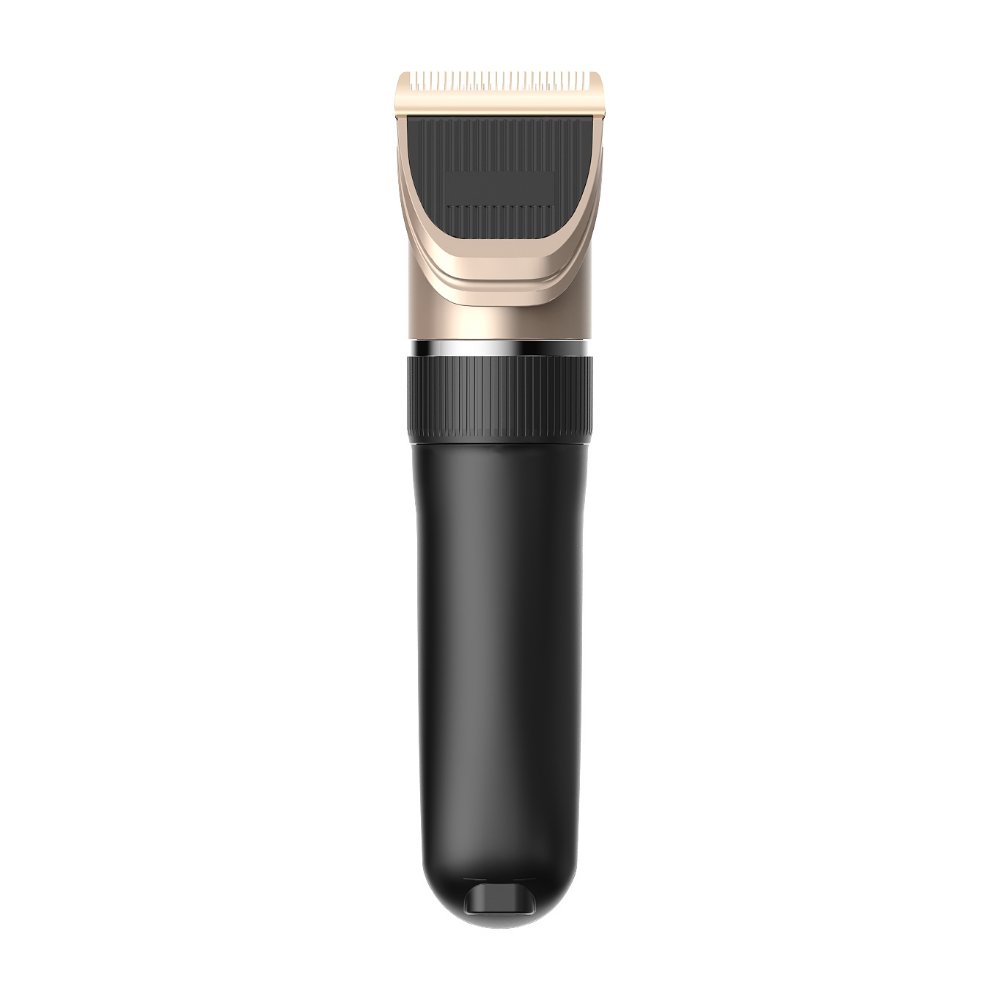
For a DDG-S01 speed enquiry, retain the catalogue’s motor and load-speed statements as separate fields. Ask the supplier to identify the unit, measured point, speed setting and conditions for each value. Do not compare the figures as though they describe the same measurement, or infer cutting performance from a single published number.
Keep the two speed statements visible
A buyer reviewing a wholesale hair clipper offer needs to know what a published speed figure actually describes. The DDG-S01 Electric Hair Clippers listing uses a feature statement about a 5800 RPM 280S motor. Its function description separately gives “load speed: 5000±10%,” while the specification list names motor model 280.
These entries should remain separate until the supplier explains their relationship. The reviewed page does not establish that they are measurements taken at the same point or under the same conditions. A clear enquiry asks what each entry means for the exact DDG-S01 version being offered rather than choosing one number as the definitive product speed.
Ask what is measured and in which unit
Begin with the measured point. Ask whether each statement concerns a motor, another moving component or a defined assembled-device measurement. Do not infer a blade-motion figure, a transmission relationship or a no-load condition from the motor wording. Those details require the supplier’s explanation.
Preserve the units as published when quoting the source. The feature statement explicitly uses RPM; the function line presents a number and percentage beside “load speed.” Ask the supplier to confirm the unit intended for that function field. A reader should not silently add a unit and then treat the edited line as an exact quotation from the source.
Also ask what the percentage applies to. A stated tolerance needs an identified value and measurement basis to be useful in an offer. This article does not calculate an acceptance range or establish a production limit from the catalogue entry. Request the supplier’s intended interpretation and keep it with the response.
Connect the figures to the offered motor and setting
The difference between the 280S feature wording and the 280 specification field raises an identification question. Ask the supplier which motor designation applies to the quoted item and whether the two entries describe the same offered configuration. Do not treat the shorter designation as a harmless abbreviation without confirmation.
The listing also mentions high and low speed adjustment. It does not provide a verified mapping between each setting and the two published speed statements. Request that mapping where it matters to the enquiry. The presence of two speed-related numbers is not proof that one belongs to high and the other to low.
Published field | Catalogue wording | Clarification to request
Motor feature | 5800 RPM; 280S motor | Measured point, conditions and offered motor identity.
Function entry | Load speed: 5000±10% | Intended unit, load basis and percentage interpretation.
Motor specification | Motor model: 280 | Relationship to the 280S wording for the offered version.
Speed selection | High and low adjustment mentioned | Which declared value applies to each proposed setting.
Offer reference | DDG-S01 listing | Exact quotation line and sample or report identification.
Request measurement context with any supporting result
If the supplier provides measurement information, ask it to identify the tested or declared configuration, the measurement point and the conditions. Relevant context may include the selected setting and the power-supply state used for that result. These are fields to request, not conditions established by the catalogue.
Keep the supplier’s result connected to its sample or report reference. A number copied into a message without that connection may be difficult to relate to the actual offered item. This is a document request; it is not an instruction for a buyer to open, modify or operate an exposed device to create a measurement.
A speed value also does not independently establish low noise, cutting quality or suitability for every hair type. Those are different performance questions. If a buyer has a separate performance requirement, describe it separately and request appropriate supplier information rather than using the speed figure as proof of the entire requirement.
Compare offers only after the fields align
Two offers may both display a large speed number while referring to different measured points or conditions. Compare the field definitions before comparing the numbers. Where a supplier response remains incomplete, retain the open question; do not substitute an assumption from another model or a different supplier’s explanation.
• Keep motor and assembled-device statements in separate fields.
• Record the intended unit and measured point for each figure.
• Identify the offered motor designation and speed setting.
• Retain the supporting result and quotation revision together.
If a quotation changes the motor identification or speed description, ask whether the previous measurement information still applies. A similar outward appearance does not establish an unchanged motor or operating basis. Keep revisions visible so that the purchasing team can see what the supplier currently proposes.
DDG-S01 speed specification questions
Are 5800 RPM and 5000±10% directly comparable? Not without the supplier identifying the unit, measured point and conditions behind each entry.
Do the two numbers identify high and low settings? The reviewed source does not establish that mapping. Ask the supplier to explain the proposed settings separately.
Are 280 and 280S confirmed as the same motor? No such equivalence is established here. Request the offered motor designation on the quotation.
Does a speed figure prove cutting performance? No. Keep the speed declaration separate from any cutting, noise or other performance requirement.
Send a field-by-field speed enquiry
Attach the DDG-S01 reference and the two published speed entries through the contact page. Ask the supplier to return a clearly identified specification for the offered version. The catalogue and blog provide further product context. A defined measurement basis makes the response useful for a purchasing comparison.
Product and contact references
https://xizsappliances.com/product/ddg-s01-electric-hair-clippers/
https://xizsappliances.com/contact/
https://xizsappliances.com/products/
https://xizsappliances.com/blog/